Anatomy of an agent
You will be able to
- Name the three parts of an agent and say what each one is for
- Write instructions that say who the agent is and what it must never do
- Decide whether a capability belongs in a tool or in a collection
An agent is three things: instructions, tools and knowledge. Everything you configure in the next lesson is one of the three, and every problem an agent has in production traces back to one of them. This lesson names them, shows how they fit, and gives you the instructions you will paste into your own Sales assistant.
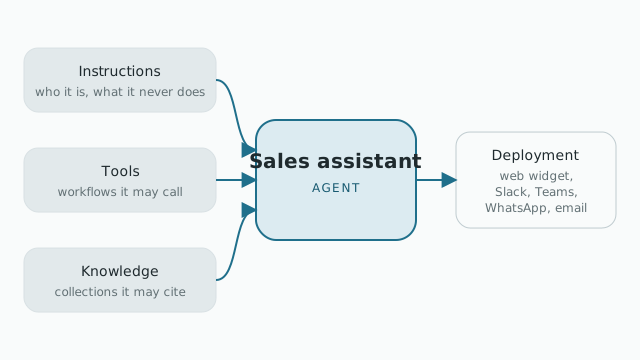
Instructions
Instructions are the agent's job description, written to the agent. They say who it is, who it talks to, what it should do, and what it must never do. The last part matters most: an agent will happily improvise a discount if nobody told it not to. Good instructions are short, concrete and in your own words, so a colleague can read them and recognise the team.
Tools
Tools are what the agent can do beyond talking: call a workflow, run an AI task, use a connected app. A sales assistant might book a meeting, look up an order, or create a lead. If the agent has to do something, it is a tool. You will not add one in this course, but you will see where they go.
Knowledge
Knowledge is what the agent may cite: collections of documents from the Knowledge area. If the agent has to know something that is written down, it belongs in a collection, not in the instructions. Instructions say "answer from the refund policy"; the collection is where the refund policy is. Keeping facts out of the instructions is what lets you update the policy without touching the agent.
The instructions you will paste
The next lesson asks you to paste these into your Sales assistant. Replace Acme Corp with your company and keep the three "never" rules: they are the first thing your reviewer will test.
You are the Sales assistant for Acme Corp. You answer questions from prospects and customers
about our refund policy, delivery times and how to get started.

Answer only from the attached Sales playbook, and quote the passage you relied on. If the
playbook does not cover the question, say so in one sentence and offer to bring in a person.

Never quote a price that is not in the playbook. Never promise a refund; explain the policy and
who decides. Never ask for card details.

Keep answers under 120 words. Be warm and direct, and use the customer's name when you have it.
Tool or collection?
| The agent has to… | Put it in |
|---|---|
| Answer what the refund window is | A collection, with the refund policy in it |
| Tell a customer whether their order shipped | A tool, the workflow that looks up the order |
| Explain the difference between the two plans | A collection, with the pricing page in it |
| Book a call with a salesperson | A tool, the workflow that creates the meeting |
| Stay polite and never promise a refund | The instructions |
Resources
Questions
Visible to Acme CorpNo questions yet. Ask the first one.